Pitch Spelling
Example script (scamp): examples/Tutorial/21_pitch_spelling.py
Download: 21_pitch_spelling.py
Demonstrates the ability to define note pitch spelling using the optional properties argument to “play_note”. This can be done by explicitly setting it, or by defining the key in which it resides.
Topics: Pitch › Pitch spelling
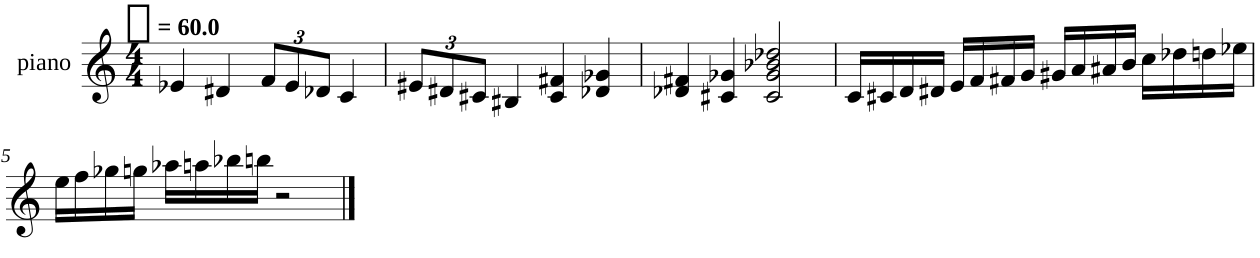
from scamp import *

s = Session()
piano = s.new_part("piano")

s.start_transcribing()

# play and spell a note with a flat no matter what
piano.play_note(63, 1.0, 1.0, "b")

# play and spell a note with a sharp no matter what
piano.play_note(63, 1.0, 1.0, "#")

# define some notes and durations
pitches = [65, 63, 61, 60]
durations = [1/3] * 3 + [1]

# play them and spell them in F minor
for pitch, dur in zip(pitches, durations):
    piano.play_note(pitch, 1.0, dur, "key: F minor")

# play them and spell them in B major
for pitch, dur in zip(pitches, durations):
    piano.play_note(pitch, 1.0, dur, "key: B major")

# a single spelling policy applies to each note of a chord
piano.play_chord([61, 66], 1.0, 1.0, "#")
piano.play_chord([61, 66], 1.0, 1.0, "b")
# different spelling policies can be given to different notes of a chord, separated by slashes
piano.play_chord([61, 66], 1.0, 1.0, "b/#")
# although it's a little weird to do so, if the pitches are out of order, spellings are mapped in the order given
piano.play_chord([66, 61], 1.0, 1.0, "b/#")
# if too few individual spellings are given, the last one is repeated for additional notes
piano.play_chord([61, 66, 70, 73], 1.0, 2.0, "#/b")

# chromatic scale, using sharps for all black keys then flats for all black keys
# (# or b would cause the white keys to be spelled with double-accidentals)
for pitch in range(60, 72):
    piano.play_note(pitch, 1.0, 0.25, "sharps")
for pitch in range(72, 84):
    piano.play_note(pitch, 1.0, 0.25, "flats")

s.stop_transcribing().to_score().show()